
If your cat has started knocking things off shelves for sport, yowling at walls, or turning the sofa into a scratching post, there is a reasonable explanation. Many cats may become bored. Boredom in cats is not just a minor inconvenience. Left unchecked, it builds into stress, destructive behaviour, and a very unhappy housemate.
The colder months make this worse. Cats that usually venture outside for a wander spend more time indoors as the days shorten. Even cats that never go outside at all tend to feel the shift. There is simply less going on during that time indoors, and many cats have more idle hours to fill. The good news is that indoor cat enrichment ideas do not need to cost much or take a lot of time. A few changes to your cat's environment and daily routine can help your cat stay mentally and physically stimulated through the season, and make a genuine difference to your cat's life.
Signs your cat may be bored
Knowing the signs your cat is struggling is the first step. Cats do not broadcast boredom the way dogs do. The signs tend to be quieter and easy to write off as personality quirks rather than something worth addressing.
Watch for these patterns, particularly if they have appeared or worsened as the weather turned:
-
Sleeping far more than usual during hours they would normally be awake
-
Over-grooming, including bare patches on the belly or inner legs
-
Increased furniture scratching or knocking objects off surfaces
-
Following you from room to room, demanding attention constantly
-
Zoomies late at night, or bursts of frantic energy at odd times
-
A noticeable dip in interest in toys they used to engage with
-
Eating out of boredom rather than hunger
Every cat is different, and none of these automatically confirm boredom. Some can have medical causes, so it is always worth a vet check if changes are sudden or severe. But if your feline friend is ticking several of these boxes and nothing health-related has been ruled out, the environment for your feline probably needs more going on in it. Many cats may become less active and visibly understimulated without owners realising the cause.
Why winter changes things for indoor cats
Cats are naturally most active around dawn and dusk. In the warmer months, those activity windows line up with outdoor movement to watch, smells drifting through open windows, and long evenings to explore. As the days shorten, all of that shrinks. Dusk arrives earlier, the garden goes quiet sooner, and cats naturally gravitate towards warm spots indoors rather than venturing out.
When a cat spends more time indoors during winter, they lose much of what kept them mentally engaged. Cats that rely on the outside world as a source of stimulation, even just watching from a perch, notice the difference quickly. Providing indoor enrichment for cats is about replacing some of what the season takes away and building an environment where your cat can express their natural instincts, even on the greyest days.
Make the window work harder
A comfortable perch near a window is one of the most effective indoor cat enrichment ideas you can offer. Positioned at the right height to observe the outside world, your cat can watch birds, squirrels, or the movement of the street and feel genuinely occupied.
A window perch, a cat tree placed near the glass, or a cleared sill with a soft pad all give your cat a secure vantage point. Bird activity outside matters too. If you have outdoor space, a feeder placed within sightline of the window turns a quiet winter view into live entertainment. Many cats will spend extended periods near a window tracking that movement outside, which provides great mental stimulation without any effort on your part.
Keep curtains fully open during daylight hours. Natural light helps regulate your cat's energy and mood through the shorter days, and it keeps the window station genuinely inviting rather than cold and dim.
If you have the space, a catio allows your cat to experience fresh air and outdoor sounds safely. Catios do not need to be large to be effective. Even a compact window-box enclosure gives indoor cats a way to connect with the outside world while staying in a secure environment, and can allow your cat to express their natural curiosity without the risks of unsupervised outdoor access. For cats that enjoy it, a lightweight adjustable cat harness or a reflective cat harness vest can also allow short supervised garden visits on mild days, which many cats find genuinely stimulating.
Rotate toys to keep boredom at bay
Before spending anything, try this: box up all your cat's current toys and bring out two or three at a time on a weekly rotation. Many cats lose interest in familiar objects quickly, but the same toy returned after a fortnight away feels new again. Rotating toys regularly is one of the most effective, cost-free enrichment ideas for cats available to any cat owner.
Crinkle balls, feather mice, treat-dispensing toys, catnip pouches, and foil scrunchies all stay interesting for longer when kept in circulation. Toys encourage play best when there is an element of novelty to them, and toys to keep boredom at bay do not need to be new or expensive — they simply need to feel fresh.
Feed their brain, not just their bowl
Cats are natural hunters. A cat's natural instinct is to stalk, chase, and catch before eating. A bowl served twice a day meets nutritional needs but skips all the mental effort that mealtime would naturally involve.
Puzzle feeders address this directly. As your cat works to release the food, they get the mental and physical stimulation that a bowl simply cannot provide. Start with something simple and increase the difficulty as your cat masters each level. Treat-dispensing toys also allow cats to engage with feeding in a more active, satisfying way, letting them work for their food rather than eating from a stationary bowl.
Hide-and-seek feeding games tap into natural hunting instincts and provide great mental stimulation on quieter days. Scatter dry food across a snuffle mat, hide kibble inside cardboard tubes, or tuck treats around the house and let your cat search. For a simple treat-based option, lickable treat squeeze spoons are an easy way to add variety to feeding time. Your cat licks at their own pace, which slows consumption and provides the kind of focused, satisfying activity that a bowl cannot replicate.
Wet food is worth considering in the colder months too. Cats tend to drink less water indoors during winter because they are less active and cold water is unappealing. Wet food provides moisture alongside nutrition and tends to be more satisfying, which also helps to keep boredom eating in check.
Add vertical spaces
Cats love to climb. Vertical spaces give them a sense of security, a better view of their territory, and a physical reason to climb and explore different areas of the home. If your home is mostly at floor level, your cat is missing an important layer of enrichment for cats.
Cat trees are the most practical solution, offering dedicated places to climb and explore, perches to rest on, and scratching posts built in. Cat trees also allow cats to survey the room from a safe height, satisfying the territorial instinct that every cat carries. If a full cat tree does not suit the space or budget, cleared shelves, a blanket draped over a wardrobe top, or a wall-mounted perch all serve the same purpose. The goal is to give your cat height and let your cat feel in control of their surroundings.
In homes with multiple cats, vertical spaces also allow cats to get away from each other without conflict during the longer stretches of time indoors, which helps keep the overall atmosphere calmer.
Interactive play sessions that actually work
Interactive play sessions are the most direct way to help your cat stay mentally and physically stimulated. The key is consistency. A ten to fifteen-minute wand toy or feather teaser session in the morning and another in the early evening, when cats are naturally at their most active, provides the mental and physical stimulation that enrichment toys alone cannot replicate.
Technique matters as much as timing. Move wand toys like prey: short, erratic bursts followed by pauses and retreats. Let your cat pounce and catch the toy a few times during each session. This mirrors a cat's natural hunting instincts and gives the whole play sequence, from stalk and chase through to pounce and catch, a satisfying conclusion. Ending playtime with a small treat completes the hunt-catch-eat sequence that every cat expects, and helps them settle more easily afterwards.
Regular play sessions using interactive toys that your cat can engage in play with independently, such as automated wand toys or battery-powered bugs, are also useful for times when you are unavailable. They provide an outlet between sessions and help ensure your cat has something to stimulate them across the full day.
Feather teasers are particularly effective for cats that have become less active or disinterested. The unpredictable movement mimics bird activity closely enough to engage even reluctant players, and rotating feather teasers in and out of circulation keeps them effective for longer.
Grooming as enrichment
Grooming is often overlooked as an enrichment activity, but a good grooming session does more than keep the coat in order. It stimulates circulation, reduces loose fur, and often sends cats into a deeply relaxed state. For many cats, a calm grooming session is one of the most effective ways to strengthen the bond between cat and owner, and it is an activity your cat can enjoy regardless of the weather outside.
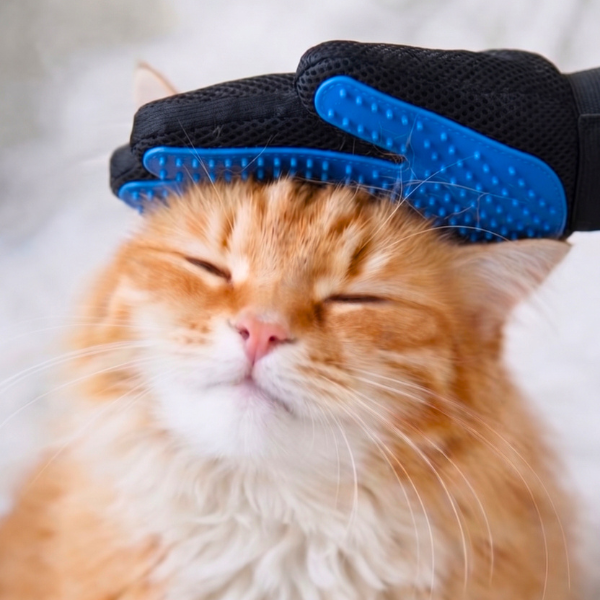
Cats naturally spend more time indoors in winter and tend to shed differently as the season shifts. A self-cleaning slicker brush with gentle bristles is well suited to regular use without irritating the skin, and a cat grooming glove is a good option for cats that are less tolerant of brushes, as the sensation is closer to being stroked. Either way, a few minutes of grooming several times a week adds a calm, tactile element to your cat's enrichment routine that interactive toys alone cannot replicate.
Create a cosy corner
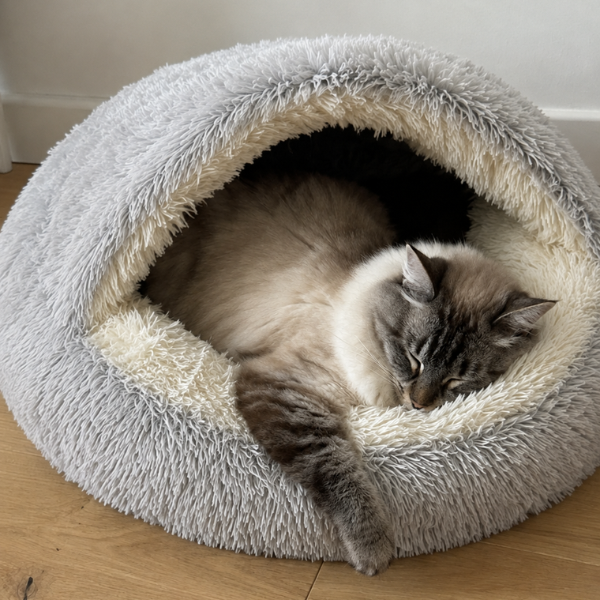
Every enrichment routine needs a proper wind-down at the end of it. Cats that have played, eaten, and explored need somewhere warm, quiet, and genuinely comfortable to rest without interruption. In winter, that resting space matters more than usual and forms an important part of your cat's life.
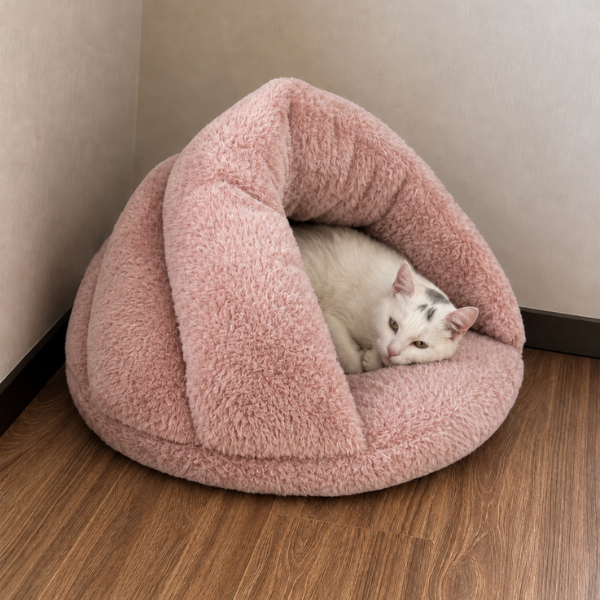
A warm thick plush cat bed positioned in a quiet corner away from foot traffic gives your cat the deep rest that follows a stimulating day. For cats that love a more enclosed sleeping space, a slipper-style cat bed provides the covered, den-like feel that many cats instinctively seek out when they want to feel secure. Both are a significant step up from a blanket on the sofa and tend to be used consistently once a cat has claimed them.
DIY enrichment ideas that actually deliver
Some of the most effective indoor cat enrichment ideas cost nothing at all. Cardboard boxes are the most underrated enrichment tool available to any cat owner. Connect several with cut-out doorways to make a tunnel system, hide a treat at the back, or drop in some catnip and let your cat investigate. Cats love enclosed spaces because they provide a real sense of security, and a new cardboard box gives them something to explore and claim as their own. You can make DIY enrichment setups as simple or elaborate as you like, as cats respond to novelty regardless of the effort involved.
Clicker training is worth trying with your furry friends too, even if it sounds unexpected. Cats can learn simple behaviours, including touching a target, sitting on cue, or moving between surfaces, and tricks can provide genuine cognitive challenge alongside physical activity. A five to ten-minute training session is mentally tiring in the best possible way, and it is one of the most reliable ways to strengthen the bond between cat and owner. Every cat responds to positive reinforcement differently, so pay attention to what your cat can enjoy and build from there.
Build an enrichment routine
A consistent enrichment routine does more for your cat's life than any single product or activity. A loose daily structure, such as morning puzzle feeding, a midday window session, an interactive play session in the early evening, and a calm wind-down before bed, gives your cat predictable anchor points rather than long, formless stretches of time indoors with nothing to do.
Every cat will have preferences. Some will take immediately to puzzle feeders; others will be obsessed with feather teasers. The goal is to keep your cat mentally and physically stimulated with enough variety that nothing becomes stale. A good enrichment routine keeps boredom at bay not through constant novelty, but through consistent engagement.
When boredom tips into anxiety
Some cats do not just become bored during the colder months; they become genuinely unsettled. More time indoors, changes in household routine, and the loss of outdoor stimulation can all tip a sensitive cat towards stress rather than simple under-stimulation. Signs to watch for include persistent hiding, increased vocalisation, reluctance to eat, or over-grooming that does not improve with enrichment changes.
For cats that seem genuinely anxious rather than just bored, a cat calming collar can provide additional support alongside environmental changes. These release calming pheromones continuously and are worn like a standard collar. They are not a substitute for enrichment or veterinary advice if anxiety is severe, but they can take the edge off for cats that struggle with seasonal transitions.
Winter safety check: collar and ID tag
The colder months are also a sensible time to check your cat's collar and ID tag. Tags wear down over time, and contact details change. A tag that was legible last spring may not be readable now.
If your cat ventures outside occasionally or has a habit of slipping out, visibility matters in the darker months. A reflective breakaway cat collar makes your cat easier to spot in low light. For added peace of mind, the reflective breakaway collar with AirTag holder lets you track your cat's location if they do wander further than usual.
Pair either with a clear engraved ID tag so that anyone who finds your cat can reach you immediately, without needing a scanner or an app. Our engraved cat tags are available in a range of shapes including heart and paw designs, and are engraved to order with your contact details. If you prefer an all-in-one option, our personalised engraved breakaway collar carries your cat's details directly on the collar itself.
The short version
A cat that spends more time indoors does not have to be an unhappy one. Rotate toys. Set up a proper window view. Introduce puzzle feeding. Build regular play sessions into the day. Add height. Groom regularly. Create a proper cosy resting spot. Keep a simple enrichment routine.
.png)
Small changes applied consistently will keep your cat happy and healthy when the garden is at its quietest, and your feline friend will be far more mentally and physically stimulated for it.