
There's a look cats give you when you pick up your bag. Not every cat, not every time. But if you know, you know. It's that slow, unblinking stare from the sofa that follows you to the door and stays with you a little longer than it should.
For many pet owners, it's easy to write this off as typical cat behaviour. But if something has felt slightly off since your routine shifted, it might be worth paying attention. Separation anxiety in cats is more common than most cat owners realise, and it tends to surface exactly when life gets busier again.
Can a cat have separation anxiety?
Separation anxiety is something we readily associate with dogs, but whether a dog or cat is involved, the underlying emotional need for security is the same. Research increasingly shows that cats form genuine attachments to the people they live with, and that they can develop separation anxiety when those people are absent more than usual.
A study published in Current Biology found that 64% of cats showed secure attachment to their caregivers, a pattern similar to what's seen in dogs and even young children. For those cats, their pet parent being present or absent genuinely matters. The idea that cats simply don't care whether you're home is, for most domestic cats, a myth.
Anxiety in cats can build gradually, or it can flare up when something changes. A new job, longer commutes, a return to the office after working from home. Or simply the end of a stretch where you were around more than usual. What feels like a minor schedule change to you can feel like something much bigger to a cat whose whole day revolved around your presence.
Signs of separation anxiety in cats
The tricky thing about cat separation anxiety is that cats don't express it the way dogs do. The signs of separation anxiety in cats tend to be subtler, easy to mistake for misbehaviour, mood, or just cat weirdness.
If your cat shows signs of any of the following, particularly when they've come on recently or worsened since your schedule changed, it's worth taking seriously.
-
Excessive vocalisations, such as calling, yowling or crying, particularly before you leave
-
Going to the toilet outside the litter box, especially on your belongings; bedding and worn clothing are common targets
-
Overgrooming, which can lead to thinning patches of fur on the belly or inner legs, one of the more physical signs of stress
-
Destructive behaviour, including scratching or general chaos when left alone, more common in male cats
-
Hyper-attachment when you are home, following you room to room and refusing to settle unless you're in sight
-
Changes in appetite, eating less or showing little interest in food since your routine changed
-
An unusually intense greeting when you return, frantic behaviour at the door that goes noticeably beyond a normal hello
A cat showing signs of separation-related behaviour doesn't always mean the situation is severe. But left unaddressed, it can make the problem much worse over time. No single sign confirms that your cat is experiencing separation anxiety, so it's always worth speaking to a veterinarian if you're unsure.
Why some cats struggle more than others
Separation anxiety doesn't affect every cat equally. A few factors make some cats more vulnerable.
Indoor cats are among the most commonly affected. With no access to the outside world, their environment is smaller and your presence takes up more of it. When that presence disappears for eight or nine hours, the contrast is sharp.
Cats in single-person households tend to concentrate all their social attachment on one person. Cats that rely heavily on their owner for stimulation, rather than having had the opportunity to become more independent, tend to find time alone harder.
Cats that were orphaned, weaned early, or bottle-raised often form unusually strong bonds with their caregivers as a result of early dependence.
And in any household, a significant change in your cat's routine is one of the most common triggers. Returning to longer hours away, a new schedule, a shift in the home's daily rhythm. Your cat adapted to having you there, and now it's adjusting again.
How to help your cat when you're away
There's quite a bit you can do to help your cat feel more settled during the day. Most of it is practical and worth trying before reaching for anything stronger.
Rethink how you leave (and return)
Cats pick up on pre-departure cues quickly. Putting on shoes, picking up keys, grabbing a bag: these become reliable signals that you're about to disappear, and they can trigger anxiety before you've even started leaving the house.
Try disrupting those signals. Pick up your keys and then sit back down. Put your coat on and make a cup of tea. Over time, the cues become less predictable and your cat stops treating them as an alarm.
When you're ready to work on things more deliberately, try walking outside the front door for a few minutes, then returning. Gradually increase the time you spend outside before coming back in. The goal is to teach your cat that short absences are completely normal, nothing to anticipate and nothing to dread. When you do leave for the day, don't make a big deal of it. A quiet scratch behind the ears and a calm exit is far better than a lengthy goodbye, which can change the relationship your cat has with your departures in ways that increase anxiety rather than ease it.
When you return home, remain calm and wait until your cat has settled before giving lots of attention. Reinforcing frantic greetings, however well-meaning, teaches your cat that an intense reaction is how arrivals are supposed to go.
Give them something to do
A bored cat is more likely to develop stress behaviours when left alone. Taking a look at your cat's environment to make sure it offers enough stimulation is one of the most effective steps you can take. There's lots to do to enrich the environment for your cat without spending a great deal.
Before you leave, take a few minutes to play with your cat. This helps your cat burn off energy and helps them feel calmer before the house goes quiet. One thing particularly worth building into your routine is offering a lickable treat just before leaving. The slow, repetitive licking action is naturally calming, and keeping your cat focused on something enjoyable right as you head out gradually shifts what your departure means to them. Our cat treat squeeze spoons are a simple, low-effort way to build that positive association into the daily routine.
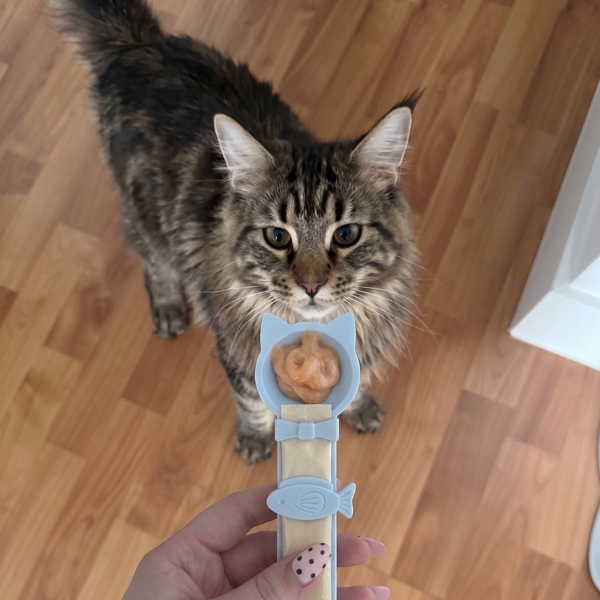
Puzzle feeders are worth adding to the mix too, as making your cat work for its food provides real mental stimulation and occupies them far longer than a bowl. If possible, get other family members involved in feeds and plays rather than leaving everything to one person. Introducing your cat to a variety of people to ease its dependence on a single individual makes a long-term difference. There's also a whole genre of 'cat TV' online, featuring slow-moving birds, squirrels and garden footage, that some cats find genuinely absorbing.
Give them a safe space to retreat to
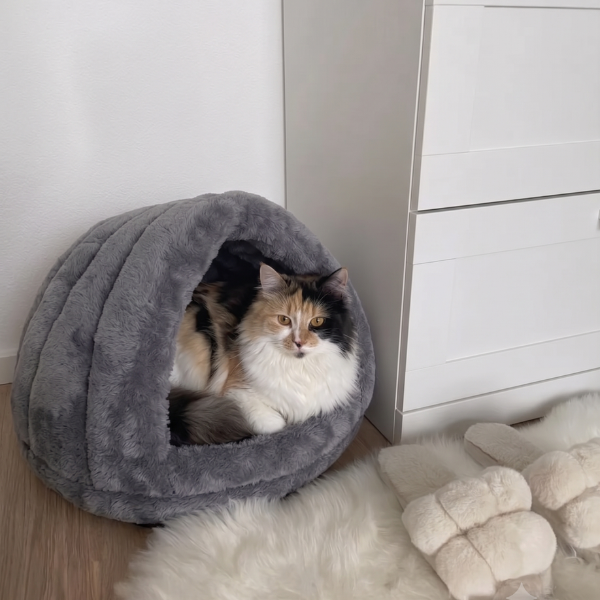
Take a look at your cat's environment to make sure there's a spot they associate entirely with comfort and security. A sheltered cat bed, particularly one with a dome or hooded shape, taps into a cat's instinct to find cover when they feel uncertain.
Position it away from the main entrance, in a quieter part of the home. Our warm plush cat bed has a soft dome structure designed to give cats that enclosed, sheltered feeling they naturally seek when they want to feel calm. Add a worn piece of your clothing nearby and it becomes an even more reassuring place for them to settle into while you're out.
Could the addition of another cat help?
For some cats with separation anxiety, the addition of another cat can help reduce the anxiety of being home alone. A companion gives your cat something to interact with and means they're not entirely dependent on a human presence. Some cats do adapt more easily with a feline companion in the house.
That said, it's not the right solution for every cat. Introducing a new cat brings its own adjustment period and can add stress rather than reduce it if not handled carefully. It's worth discussing with a veterinarian before going down this route, rather than assuming a new addition will automatically help.
Try a calming product
Pheromone sprays and plug-ins work by mimicking the calming facial pheromone cats produce naturally. When a cat rubs its cheek on your leg or against a piece of furniture, it's depositing these same pheromones as a way of marking its surroundings as safe. Replicating that signal artificially can help reduce anxiety in cats during periods of disruption.
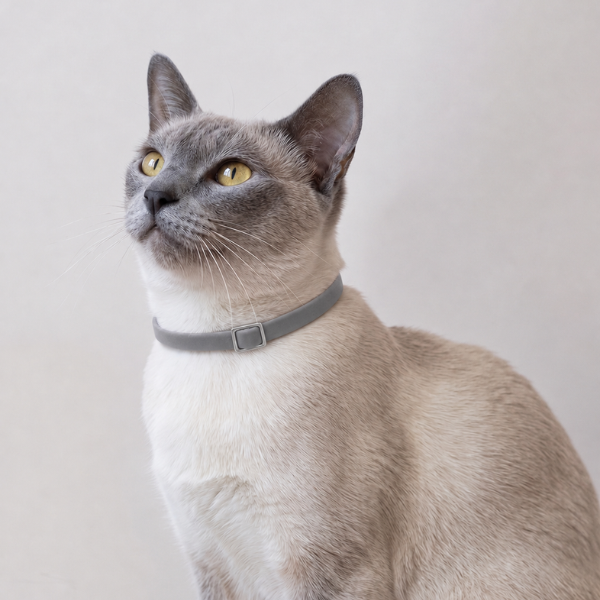
For a consistent background effect throughout the day, a plug-in diffuser works well in the room your cat spends most of its time in. For managing separation anxiety on the go, a wearable calming collar is a practical alternative. Our cat calming collar uses proven pheromone technology and provides continuous support for up to 60 days, helping cats feel more relaxed during periods of routine adjustment. It's non-invasive and a sensible first step before anything more involved.
Keep your cat safe if they try to leave
An anxious cat is more likely to bolt. An open window or a door left slightly ajar when leaving the house is all it takes. Microchipping is a sensible baseline for any cat, but a chip requires scanning equipment to be of use. A visible ID tag on their collar means anyone who finds your cat can help your pet get home immediately, without any specialist tools. If the tag is old, faded or missing, it's worth sorting sooner rather than later. Browse our personalised cat ID tags at Cattag.
When to speak to a vet or behaviourist
If you've worked through the steps above and your cat is still struggling, speak to a veterinarian. For a severely anxious cat, professional support makes a significant difference and is far better than hoping the situation resolves on its own.
Your veterinarian will want to rule out physical causes first, since some signs of separation anxiety can also indicate underlying health issues. If no medical cause is found, they may refer you to a clinical animal behaviourist (sometimes referred to as a veterinary behaviorist). A qualified professional will work with you to build a tailored behaviour modification plan, which might include gradual desensitisation, specific enrichment strategies, or in more persistent cases, short-term medication alongside behaviour work. Your veterinarian may also recommend a supplement to help reduce anxiety while longer-term behaviour work is underway. Getting support early gives cats with separation anxiety the best chance of recovery.
A final thought
.png)
Cats are more emotionally complex than their reputation suggests. The fact that yours doesn't greet you at the door with a lead doesn't mean your absence goes unnoticed, or that adjusting to a busier routine comes easily. Caring for your pet's emotional wellbeing matters just as much as the physical basics.
If something feels off since your schedule changed, trust that instinct. Small changes, applied consistently, often make a bigger difference than you'd expect.